
Morphology: lymphocytes with pink or red cytoplasmic granules. Granular lymphocytes are either cytotoxic T-cells or natural killer cells. Look alike: granulocytes (eosinophils, basophils) Clinical relevance: present in low numbers in healthy animals… Read more Granular Lymphocytes →
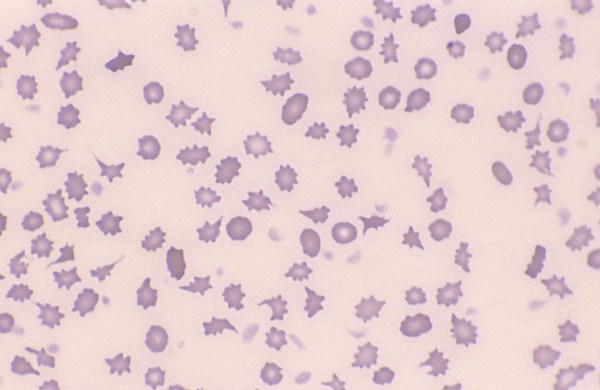
Morphology: poikilocyte is a generic term to describe red blood cells with abnormal shape. Poikilocytosis refers to large numbers of abnormally shaped red blood cells. Commonly seen with: poikilocytosis may include… Read more Poikilocytosis →

Metarubricyte: most mature form of nucleated red blood cell (nRBC). Nuclei are small and pyknotic, often eccentric, with condensed (smooth dark) chromatin. Cytoplasm is smooth and uniform and may stain… Read more Nucleated Red Blood Cells →
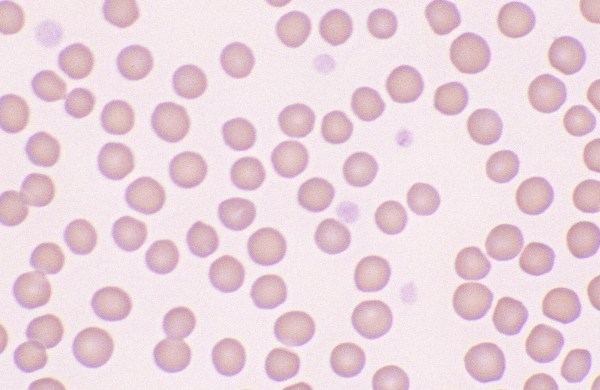
Morphology: relatively small red blood cells with some variability in size and shape and little to no central pallor. Lifespan: 65 – 76 days Other features: rouleaux, occasional Howell-Jolly bodies, and… Read more Normal Feline Erythrocytes →

Morphology: red blood cells that stain very pale due to loss of hemoglobin through intravascular lysis. Commonly seen with: other features of immune-mediated hemolytic anemia (IMHA) including spherocytes, polychromatophils, and agglutination… Read more Ghost Cells →
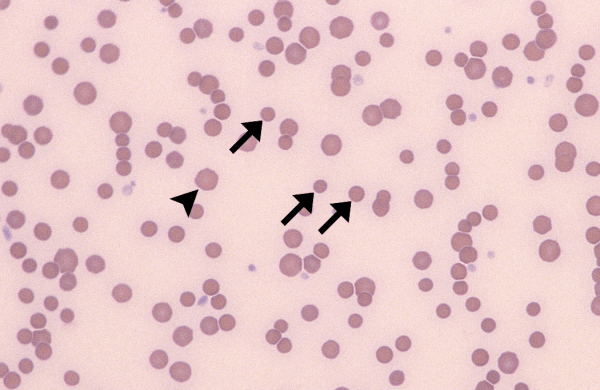
Morphology: red blood cells with a spherical rather than biconcave shape. Spherocytes appear smaller than normal red blood cells, with loss of central pallor in dogs. Look alike: microcytes (may be… Read more Spherocytes →
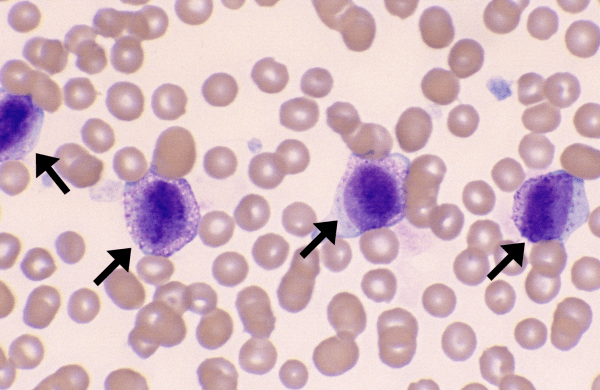
Morphology: leukocyte with a large round nucleus and numerous dark purple or blue cytoplasmic granules. Usually seen at the feathered edge of blood smear. Considerable variation in appearance of mast… Read more Mast Cells →
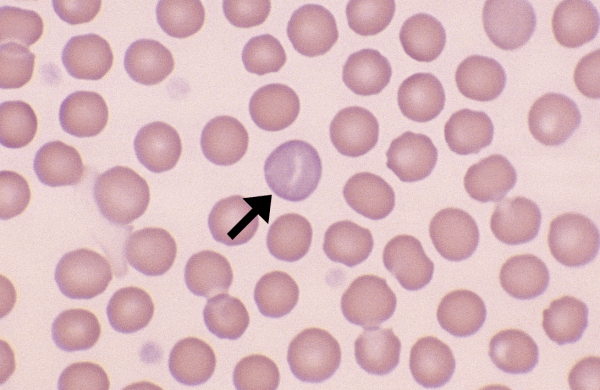
Morphology: immature red blood cells that stain dark purple on Romanowsky stains (Wright’s, Diff-Quick) due to retained cytoplasmic RNA. Larger than normal red cells. Commonly seen with: features of regenerative anemia (macrocytosis,… Read more Polychromatophils →
 Cells and Smears