
Morphology: small round leukocytes with round or indented nuclei, dark clumped chromatin, and small amounts of light blue cytoplasm. Cattle have small lymphocytes (as described), as well as large lymphocytes with… Read more Mature Lymphocytes →
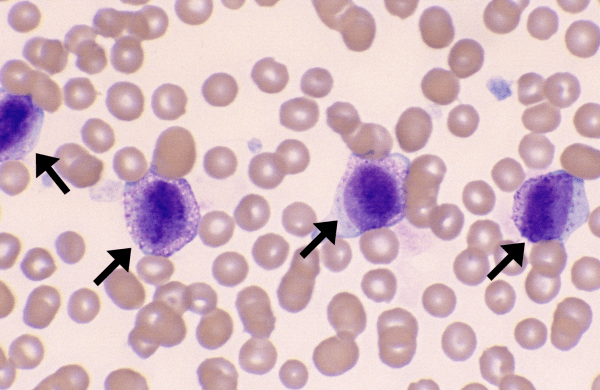
Morphology: leukocyte with a large round nucleus and numerous dark purple or blue cytoplasmic granules. Usually seen at the feathered edge of blood smear. Considerable variation in appearance of mast… Read more Mast Cells →

Morphology: intracellular yeast-like organisms with a pseudocapsule in the cytoplasm of neutrophils and monocytes. May be 1 – 20 organisms per cell. Organisms may be present in > 25% of… Read more Histoplasma →

Morphology: granulocyte with a segmented (often bi-lobed) nucleus and numerous pink-to-orange (eosinophilic) cytoplasmic granules. Considerable species variation in number, size, and shape of eosinophil granules. Considerable variation within and between dog… Read more Eosinophils →
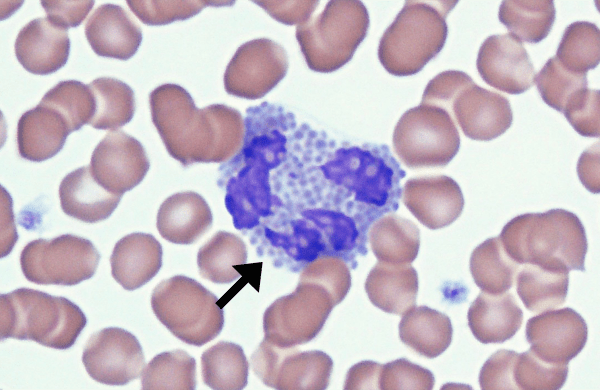
Morphology: granulocyte with a large irregularly lobulated nucleus, lavender-staining cytoplasm, and numerous purple (basophilic) cytoplasmic granules. Considerable species variation in appearance of basophils. Look alike: mast cells, other granulocytes (neutrophils, eosinophils) Clinical relevance: basophils are… Read more Basophils →
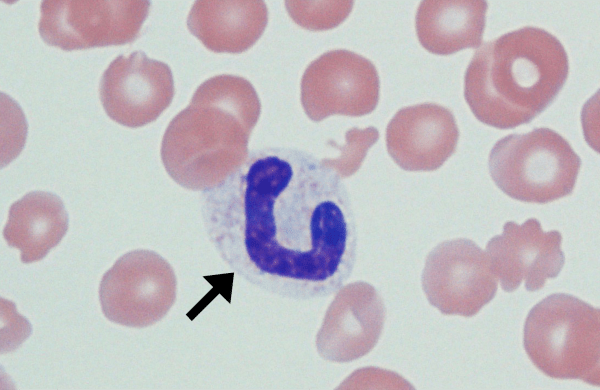
Morphology: bands are immature neutrophils with an unsegmented horseshoe-shaped nucleus. Commonly seen with: toxic change Clinical relevance: left shift (↑ bands in peripheral blood) indicates inflammation. Left shift is more pronounced… Read more Bands (Left Shift) →
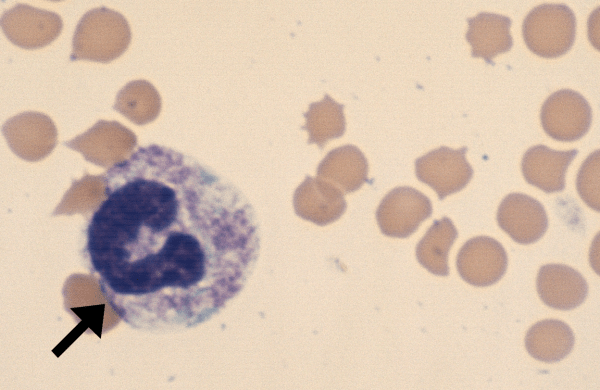
Morphology: toxic change refers to abnormalities in the cytoplasm of neutrophils including vacuolation (clear round areas that may coalesce to create a foamy appearance), Döhle bodies (dark blue irregular granules),… Read more Toxic Change →
 Cells and Smears