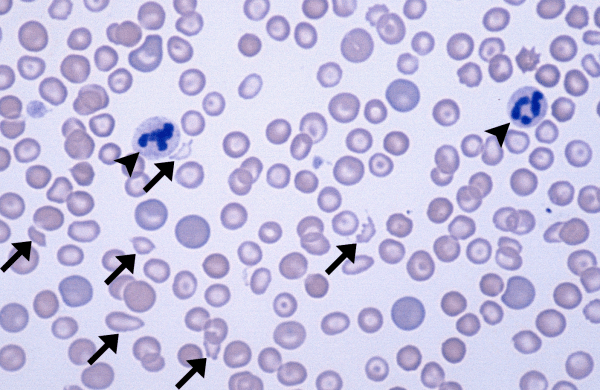
Also called: schistocytes Morphology: red blood cell fragments. Usually oblong with irregular margins, but may appear in a variety of shapes and sizes. Commonly seen with: keratocytes and acanthocytes (if caused by… Read more Schizocytes →

Morphology: small blue cocci, rings, or rods on the surface of red blood cells. May be observed in the background between red blood cells (bacteria fall off of red cells… Read more Mycoplasma →

Morphology: granulocyte with a segmented (often bi-lobed) nucleus and numerous pink-to-orange (eosinophilic) cytoplasmic granules. Considerable species variation in number, size, and shape of eosinophil granules. Considerable variation within and between dog… Read more Eosinophils →
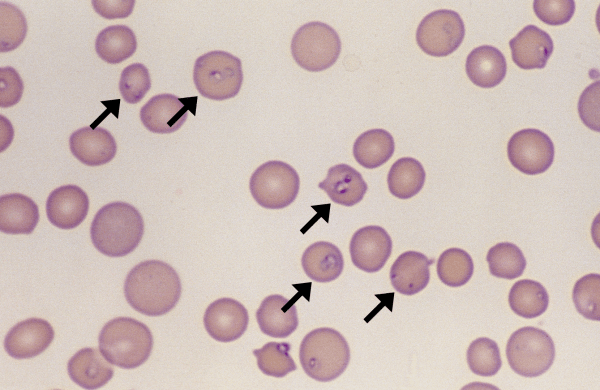
Morphology: small ring-shaped piroplasms with a dark eccentric nucleus inside red blood cells. Usually 1 – 2 piroplasms per red cell. Look alikes: siderocytes, Howell-jolly bodies, Babesia felis Commonly seen with: Mycoplasma haemofelis (concurrent… Read more Cytauxzoon felis →
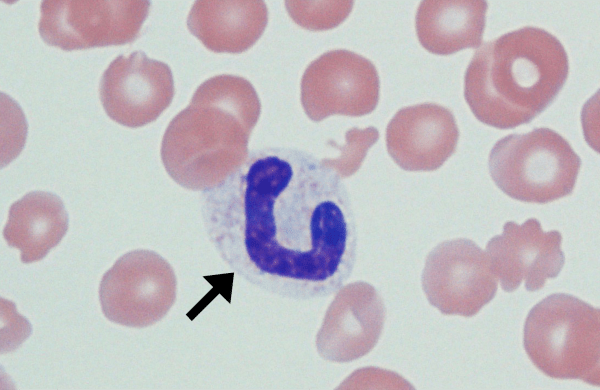
Morphology: bands are immature neutrophils with an unsegmented horseshoe-shaped nucleus. Commonly seen with: toxic change Clinical relevance: left shift (↑ bands in peripheral blood) indicates inflammation. Left shift is more pronounced… Read more Bands (Left Shift) →
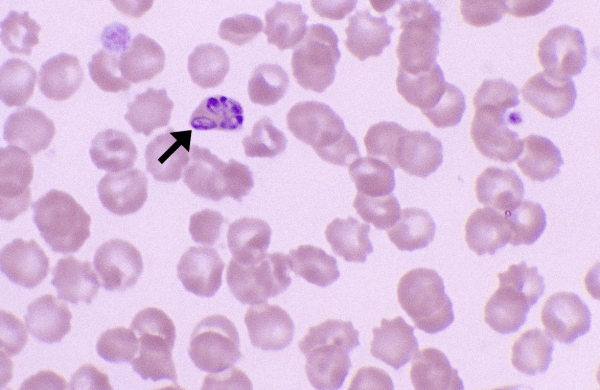
Morphology: single or multiple pear-shaped (pyriform) organisms within red blood cells. Organisms stain dark purple around the periphery and clear in the centre. Look alike: Histoplasma capsulatum Commonly seen with: other tick-borne rickettsial… Read more Babesia →
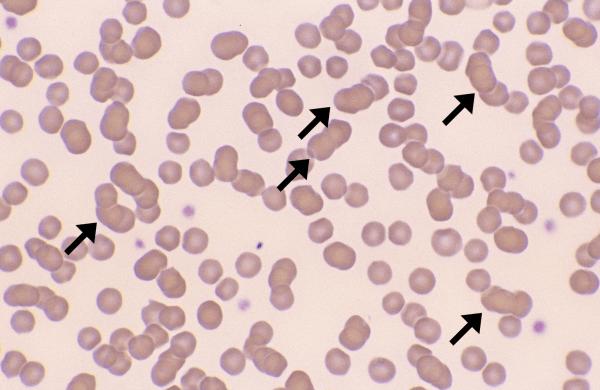
Morphology: stacks of red blood cells (like a stack of coins). Look alike: agglutination. Rouleaux can be distinguished from agglutination with a saline dilution test: place one drop of blood on a… Read more Rouleaux →
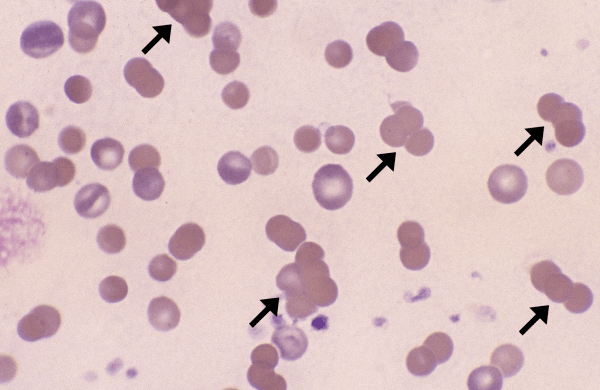
Morphology: three-dimensional clumps of red blood cells. Caused by antibodies binding red blood cells together. Look alike: rouleaux. Agglutination can be distinguished from rouleaux with a saline dilution test: place one drop… Read more Agglutination →
 Cells and Smears