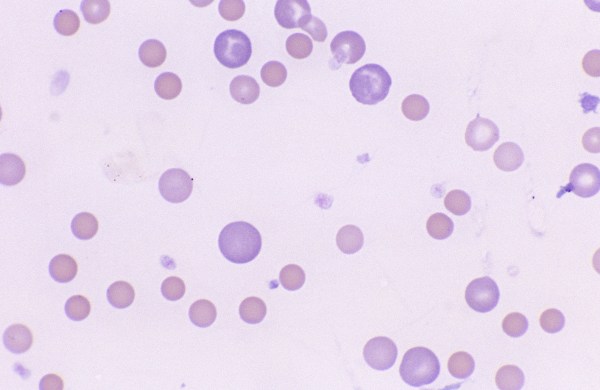
Anisocytosis
Morphology: variation in red blood cell size due to the presence of red cells larger than normal (macrocytes and polychromatophils), red cells smaller than normal (microcytes and spherocytes), or both. Commonly… Read more Anisocytosis →
Morphology: variation in red blood cell size due to the presence of red cells larger than normal (macrocytes and polychromatophils), red cells smaller than normal (microcytes and spherocytes), or both. Commonly… Read more Anisocytosis →
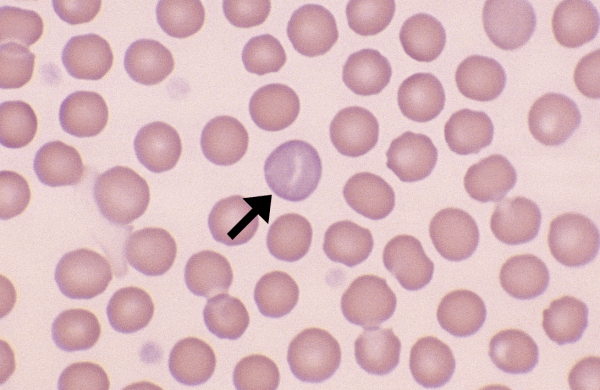
Morphology: immature red blood cells that stain dark purple on Romanowsky stains (Wright’s, Diff-Quick) due to retained cytoplasmic RNA. Larger than normal red cells. Commonly seen with: features of regenerative anemia (macrocytosis,… Read more Polychromatophils →

Morphology: granulocyte with a segmented (often bi-lobed) nucleus and numerous pink-to-orange (eosinophilic) cytoplasmic granules. Considerable species variation in number, size, and shape of eosinophil granules. Considerable variation within and between dog… Read more Eosinophils →
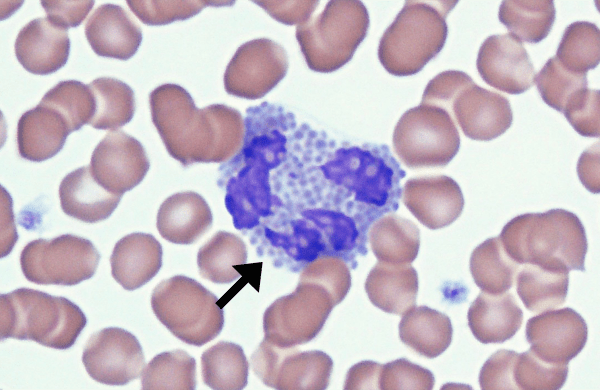
Morphology: granulocyte with a large irregularly lobulated nucleus, lavender-staining cytoplasm, and numerous purple (basophilic) cytoplasmic granules. Considerable species variation in appearance of basophils. Look alike: mast cells, other granulocytes (neutrophils, eosinophils) Clinical relevance: basophils are… Read more Basophils →
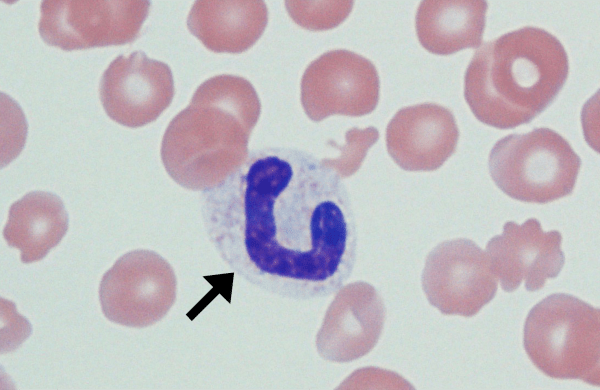
Morphology: bands are immature neutrophils with an unsegmented horseshoe-shaped nucleus. Commonly seen with: toxic change Clinical relevance: left shift (↑ bands in peripheral blood) indicates inflammation. Left shift is more pronounced… Read more Bands (Left Shift) →
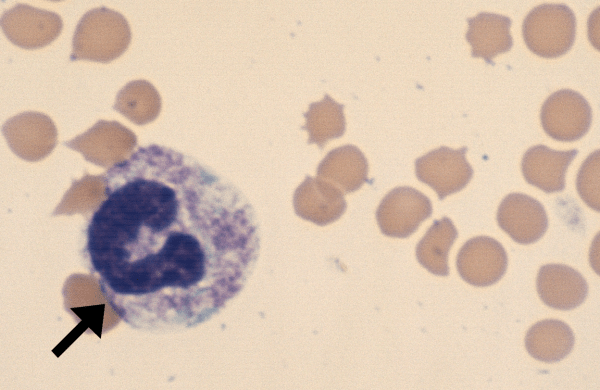
Morphology: toxic change refers to abnormalities in the cytoplasm of neutrophils including vacuolation (clear round areas that may coalesce to create a foamy appearance), Döhle bodies (dark blue irregular granules),… Read more Toxic Change →
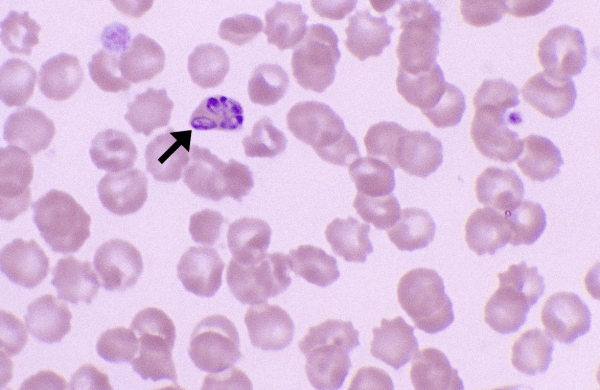
Morphology: single or multiple pear-shaped (pyriform) organisms within red blood cells. Organisms stain dark purple around the periphery and clear in the centre. Look alike: Histoplasma capsulatum Commonly seen with: other tick-borne rickettsial… Read more Babesia →
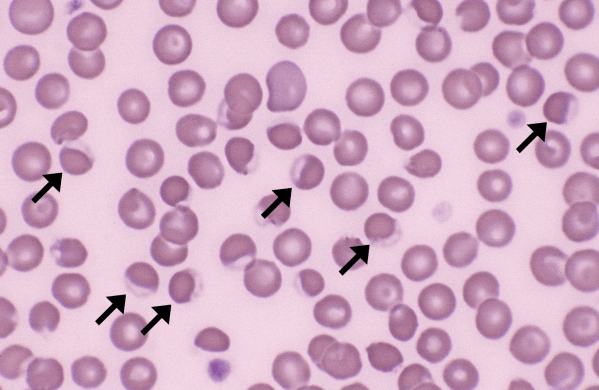
Morphology: red blood cells with a clear crescent-shaped area along one side of the periphery. Formed by the fusion of two layers of oxidized cell membrane with no hemoglobin in between.… Read more Eccentrocytes →
 Cells and Smears